
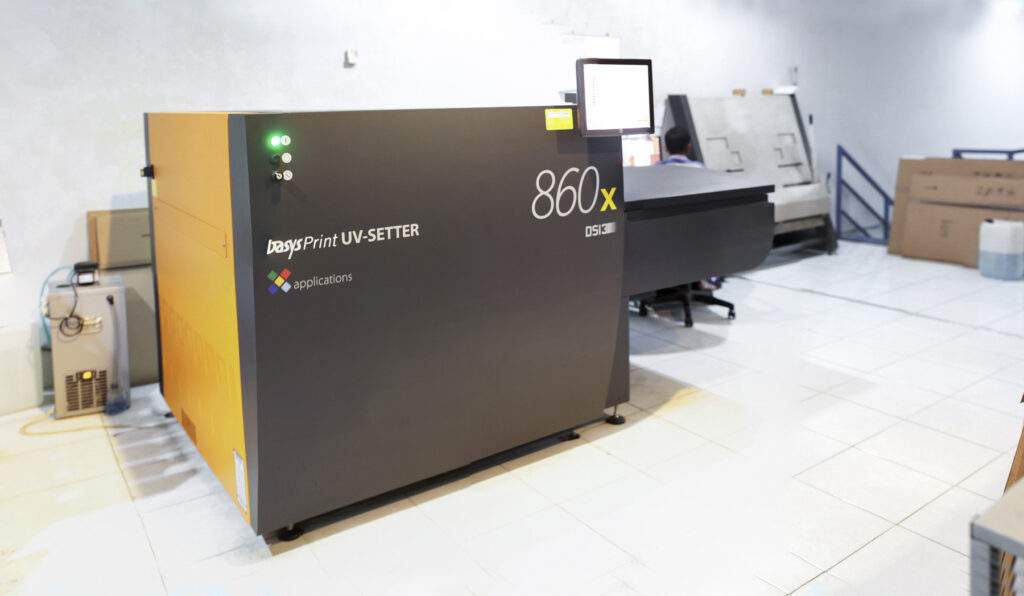
In printing, CTP stands for Computer to Plate.
A CTP machine is a device that transfers digital image data directly from a computer onto a printing plate, which is then mounted on an offset printing press.
Here’s a breakdown of what that means:
🔹 Traditional vs. CTP Process
- Before CTP:
Printers used a process called Computer to Film (CTF) — the digital file was first printed onto a film, then the film was used to expose an image onto the plate using light and chemicals. - With CTP:
The CTP machine eliminates the film stage. The digital file (PDF, TIFF, etc.) is sent directly to the plate setter, which etches or lasers the image onto a metal or polyester plate.
🔹 Benefits of CTP
- Higher accuracy — no distortion from film or manual alignment.
- Better image quality — sharper text and cleaner halftones.
- Faster production time — fewer steps mean quicker turnaround.
- Reduced costs — no film, fewer chemicals, and less waste.
- Environmentally friendly — many modern CTP systems are chemical-free.
🔹 Types of CTP Plates
- Thermal CTP: Uses heat-sensitive coatings (common for high-quality printing).
- Violet CTP: Uses violet laser technology, often faster and cheaper.
🔹 In Summary
A CTP machine is an essential part of modern offset printing, bridging the gap between digital design and traditional ink-on-paper printing. It improves speed, precision, and efficiency — key advantages for commercial printers.